Alexandra Isaacs is a researcher of technology, specifically artificial intelligence. Her work confronts one of the defining questions of our era: Will artificial intelligence elevate humanity or endanger it? Rooted in health technology and human-centered design, she has seen firsthand how powerful tools can heal, empower, and transform lives… and how easily they can be misused. This duality, innovation’s capacity for both good and harm, fuels her mission as an author. Alexandra writes not only to inform but also to influence:
Alexandra Isaacs is a researcher of technology, specifically artificial intelligence. Her work confronts one of the defining questions of our era: Will artificial intelligence elevate humanity or endanger it? Rooted in health technology and human-centered design, she has seen firsthand how powerful tools can heal, empower, and transform lives… and how easily they can be misused.

At vero eos et accusamus et iustoodio dignissimos ducim us quiblanditiis praesentium voluptatum deleniti atque corrupti quos dolores et quas molestias
At vero eos et accusamus et iusto odio dignissimos ducimus qui blanditiis praesentium voluptatum deleniti atque corrupti quos dolores et quas molestias excepturi sint occaecati cupiditate non provident, similique sunt in culpa qui officia deserunt mollitia animi, id est laborum et dolorum fuga. Et harum quidem rerum facilis est et expedita distinctio. Nam libero tempore, cum soluta. At vero eos et accusamus et iusto odio dignissimos ducimus qui blanditiis praesentium voluptatum deleniti atque corrupti quos dolores et quas molestias excepturi sint occaecati cupiditate non provident, similique.
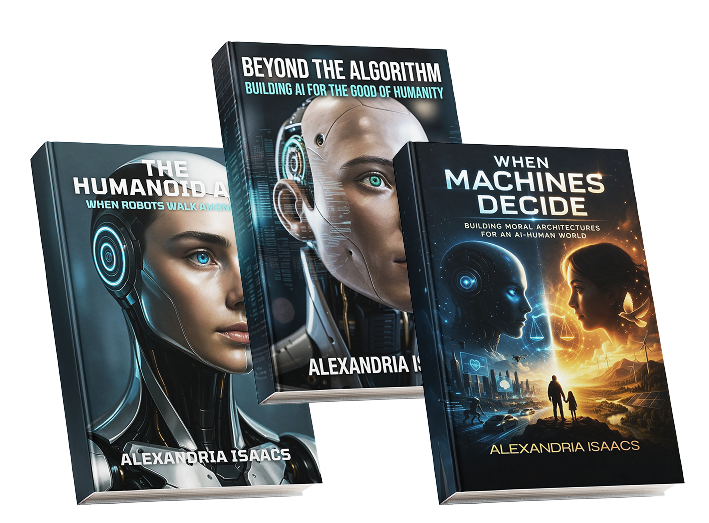
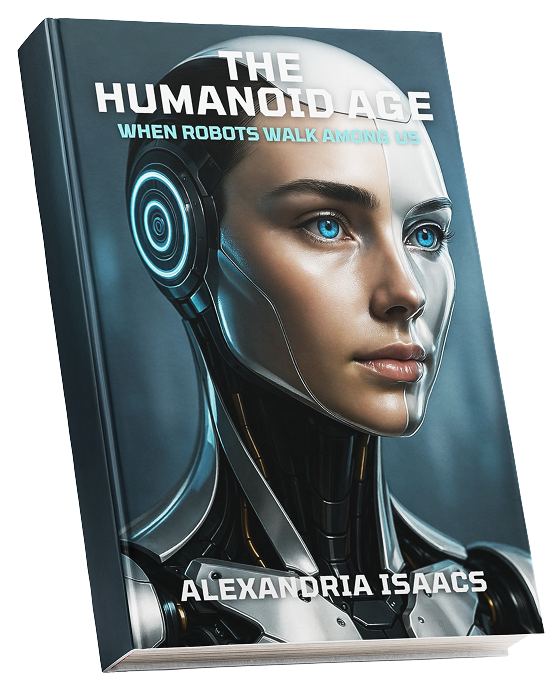
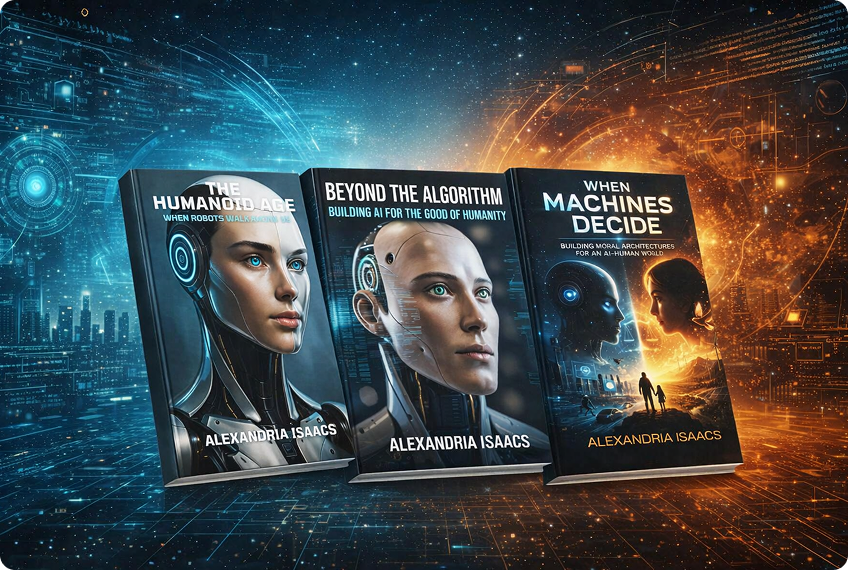
The Humanoid Age explores the growing presence of humanoid robots in everyday life. This robotics book examines how robot humanoid technology is transforming caregiving, work, and social interactions, offering a thoughtful look at the ethical and emotional implications of human-robot coexistence. Isaacs goes beyond fear and hype, providing a clear view of how humanoid robots will affect trust, dignity, and relationships. The book also covers real-world applications, such as robot caregivers and workplace interactions, highlighting the societal challenges and opportunities of integrating AI technology into social spaces.
In a world of rapidly advancing modern robotics, The Humanoid Age offers crucial insights into how humanoid robots will reshape society, helping readers understand the ethical and societal impact of robot technology.
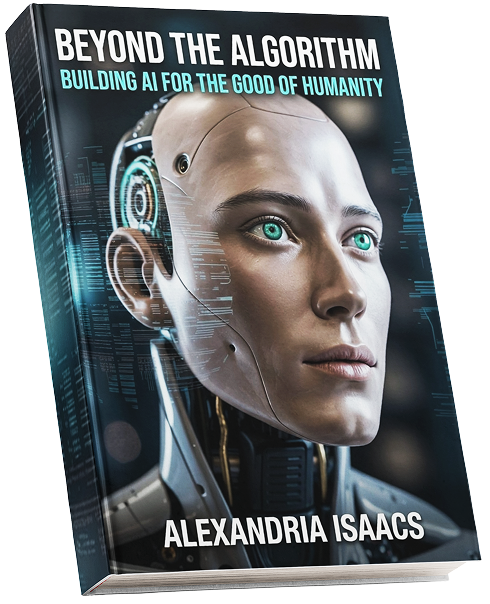
Beyond the Algorithm: Building a Human Future in the Age of Artificial Intelligence is the ultimate guide for anyone seeking to understand the intersection of technology, ethics, and humanity in the modern world. In an era where artificial intelligence is shaping every aspect of our lives, this book provides crucial insights into the challenges and opportunities posed by AI. This is more than just an artificial intelligence book. It is a deep dive into how AI impacts not only our industries but our society, our work, and even our very conception of what it means to be human. As we stand on the precipice of the age of AI, this book offers a thoughtful exploration of AI’s future, its ethical implications, and its role in the information age.
Beyond the Algorithm is more than a book about artificial intelligence. It’s an essential resource for anyone navigating the complexities of technology’s role in our lives. Whether you’re a student, a professional in the tech industry.
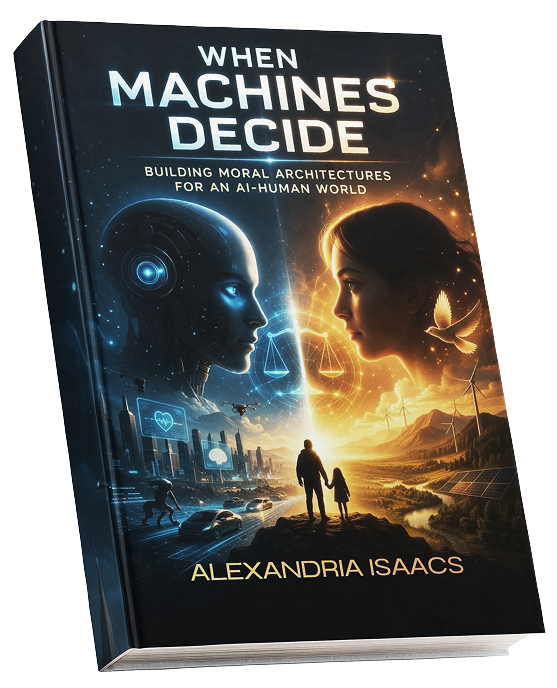
The future is not predetermined. The choices we make today about AI design, deployment, and governance will echo for generations. This book equips you to make those choices wisely, ensuring that the machines we build serve humanity’s highest aspirations rather than its basest impulses. Across boardrooms, government offices, research labs, and everyday workplaces, AI is already making decisions that affect lives, livelihoods, and the fabric of society. Algorithms determine who gets hired, who receives medical treatment, which investments succeed, and how resources are allocated. Yet most of us—even those deploying these systems—struggle to answer fundamental questions about accountability, ethics, and control.
This book emerges from working at the intersection of technology and human-centered design and witnessing both the extraordinary potential of AI to heal and empower, and its capacity to harm when deployed without adequate ethical frameworks. What I’ve learned is that the battle between good and evil in the age of AI will not be fought by machines.